A retirement expert's basic sequence: contribute enough to a traditional 401(k) for the full employer match, then max out a Roth IRA, then add more.
The logic pairs tax-deferred workplace saving with tax-free Roth growth and withdrawals, giving many savers both an employer benefit and future tax flexibility.
Current 401(k) personal contributions cap at $24.5K, or $32.5K for workers 50+. Some employers may also allow extra catch-up contributions for ages 60-63.
Current Roth IRA contributions cap at $7.5K, or $8.6K for savers 50+. Higher earners above $168K single or $252K joint cannot contribute.
Two key reminders: old 401(k) assets may move into a rollover IRA without affecting annual limits, and Roth earnings need a 5-yr waiting period.
Author: superadmin
-

401(K) and Roth IRA Game Plan for 2026
-
FIRE vs. Micro-Retirement: Which Financial Plan Will Help You in the Long Term?
FIRE (Financial Independence, Retire Early) focuses on aggressive saving to retire decades early, ideal for high earners willing to sacrifice short-term comfort. Micro-retirement involves taking planned breaks from work to rest or pursue goals, then returning to work, offering balance but potential career interruptions. A hybrid approach combining both can provide flexibility. Consulting a financial advisor helps align strategies with personal goals and risk tolerance.
Continue to full article -
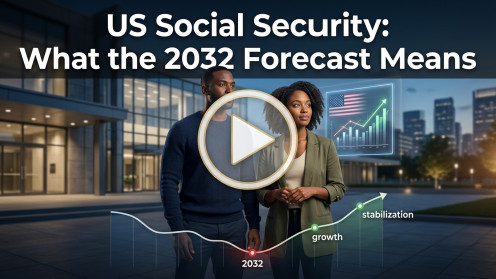
US Social Security: What the 2032 Forecast Means
The trust fund is projected to run out in 2032, triggering an automatic benefit cut of ~20% unless lawmakers rebalance the program first.
Social Security depends on economic strength: who works, what they earn, how healthy they stay, and how much they save.
The biggest long-run risks are labor market weakness, uneven earnings growth, recessions, and policy choices that fail to support workers.
Practical levers include broader workforce participation, smoother phased retirement, stronger childcare and leave supports, and immigration policies that sustain worker growth.
Current policy could weaken population growth, and early projections for 2025 and 2026 pointed to net immigration loss nationally. -

Partial Annuitization vs the 4% Rule
New US retirement research tested four income strategies across >10K simulated life paths, factoring taxes, health premiums, distribution rules, and claiming choices.
The strongest result favored partial annuitization: converting some savings into lifetime income while keeping the rest invested outperformed withdrawal-only and fully annuitized approaches.
For a 65-yr single woman with $1M, a one-time half annuity purchase ranked first, with gradual annuitization close behind in utility scores.
The withdrawal-only approach showed the weakest income and rising depletion risk, with assets exhausted before death in nearly 1 in 8 cases by age 90.
Bridging to age 70 improved the baseline retiree's results across all strategies, but some later or legacy-focused retirees benefited more from claiming sooner. -

US Social Security Reform Before 2032
The trust fund is projected to run out in 2032, triggering an automatic benefit cut of ~20% unless lawmakers rebalance the program first.
Social Security depends on economic strength: who works, what they earn, how healthy they stay, and how much they save.
The biggest long-run risks are labor market weakness, uneven earnings growth, recessions, and policy choices that fail to support workers.
Practical levers include broader workforce participation, smoother phased retirement, stronger childcare and leave supports, and immigration policies that sustain worker growth.
Current policy could weaken population growth, and early projections for 2025 and 2026 pointed to net immigration loss nationally. -
How to Retire When You Own a Business
Business owners should build personal retirement savings alongside their business to avoid relying solely on a sale. Options like SEP IRAs, SIMPLE IRAs, and Solo 401(k)s offer flexible saving choices. Early exit planning maximizes sale value, minimizes taxes, and ensures smooth transitions. Tax strategies like income spreading and Roth conversions help preserve wealth. Working with a financial advisor supports a secure, confident retirement.
Continue to full article